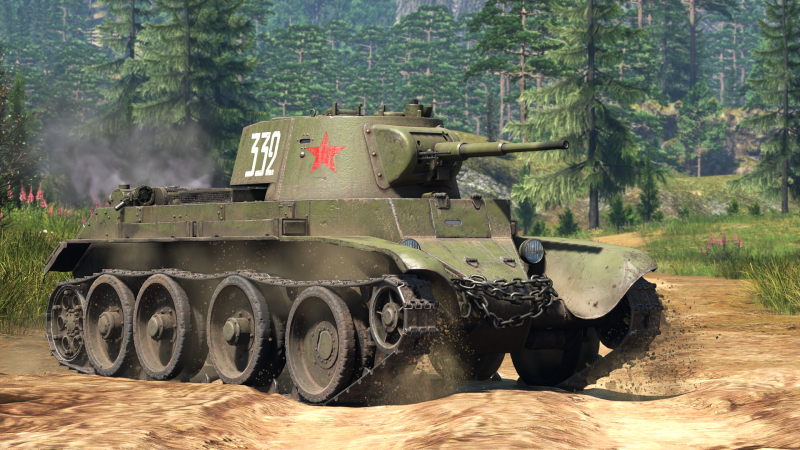
BT7
The BT-7 was a Soviet fast cavalry tank developed in the 1930s and produced by the Kharkiv Locomotive Factory for the Soviet Union. It entered service in 1935 as part of the BT (“Bystrokhodny Tank,” meaning fast tank) series, which was based on designs by American engineer J. Walter Christie. The BT-7 was designed for very high speed and mobility, capable of traveling quickly on both tracks and wheels, and it was usually armed with a 45 mm gun. Around 5,300 BT-7 tanks were produced between 1935 and 1940. The tank saw combat in conflicts such as the Second Sino-Japanese War and World War II, but its light armor made it vulnerable to anti-tank weapons, and many were lost during the early German invasion in 1941. Despite this weakness, the BT-7’s speed and maneuverability influenced later Soviet tank designs, including the development of the T-34.